Anxiety is one of the most common mental health issues affecting children and adolescents today. According to the National Institute of Mental Health (NIMH), around 9.4% of children aged 3–17 experience anxiety disorders each year (Ghandour et al., 2019). However, anxiety in youth is often overlooked or misinterpreted as behavioral issues, especially since children may not have the words to express their emotions. Recognizing the signs early and understanding the behavioral indicators is key to providing effective support. Fortunately, various coping strategies are available to help young people manage anxiety and build resilience.
Recognizing Anxiety in Children and Adolescents
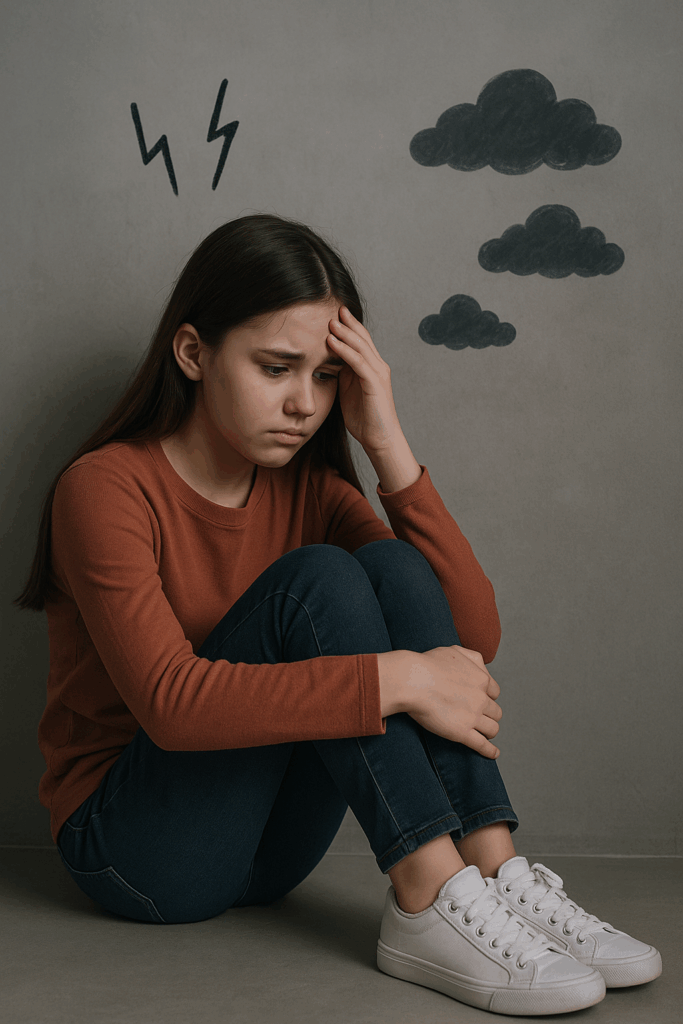
Anxiety can manifest in many ways, and its impact on children varies depending on their age, temperament, and developmental stage. Unlike adults, children may not be able to articulate their anxiety, and instead, it often presents as physical symptoms or behavioral changes (American Psychiatric Association [APA], 2022).
Common Signs of Anxiety in Children and Adolescents
-
Physical Complaints: Children may frequently complain of headaches, stomachaches, or other physical ailments without a clear medical cause. These symptoms often worsen when the child is faced with a stressful situation (APA, 2022).
-
Sleep Disruptions: Anxiety can interfere with sleep, leading to nightmares, difficulty falling asleep, or frequent waking during the night (Merikangas et al., 2010).
-
Excessive Worry or Fear: A child with anxiety might express unrealistic or disproportionate worries about social situations, schoolwork, or health (Beesdo et al., 2009).
-
Avoidance Behaviors: Children with anxiety may avoid places or situations they find stressful, such as school, social events, or even new experiences. They may also avoid trying new things out of fear of failure (Beesdo et al., 2009).
-
Irritability and Mood Changes: Anxiety can cause irritability, mood swings, or outbursts of anger, particularly in adolescents who are struggling to manage their emotions (APA, 2022).
In many cases, children who have anxiety also exhibit behavioral issues such as defiance, withdrawal, or avoidant behaviors, which can further complicate diagnosis. For example, a child might act out in school, refuse to attend, or display oppositional behavior when asked to perform tasks that make them anxious.
Identifying Behavioral Issues Linked to Anxiety
While anxiety is a psychological issue, it often presents itself through behavioral challenges. These may include:
-
School Refusal: One of the most common behaviors associated with anxiety in children is avoiding school altogether. Children may refuse to go to school because they feel overwhelmed by academic pressure or social anxiety (Merikangas et al., 2010).
-
Social Withdrawal: Anxious children and teens often isolate themselves from peers, avoiding social situations out of fear of judgment or failure. This withdrawal can lead to a decline in social skills and contribute to feelings of loneliness (Ginsburg et al., 2011).
-
Perfectionism: Many anxious children and adolescents develop perfectionistic tendencies as a way to cope with their internal fears. They may obsess over small details, struggle with transitions, or avoid tasks they perceive as too difficult (Ghandour et al., 2019).
-
Oppositional Behaviors: In some cases, anxiety may manifest as resistance to authority figures or family members. This behavior often arises from an underlying fear of failure or fear of being judged (Beesdo et al., 2009).
These behavioral signs should be a signal for parents, teachers, or caregivers to explore potential anxiety issues further, especially if the behaviors are persistent or disrupt daily functioning.
Coping Modalities and Treatment Strategies
Fortunately, there are several effective treatments and coping strategies for managing anxiety in children and adolescents. These modalities can be used individually or in combination to help reduce symptoms and improve emotional well-being.
1. Cognitive-Behavioral Therapy (CBT)
Cognitive-behavioral therapy is one of the most effective treatments for anxiety in children and adolescents. CBT helps individuals identify negative thought patterns and replace them with more balanced, realistic thoughts. It also teaches coping strategies to manage anxiety-provoking situations (Walkup et al., 2008). Children can benefit from structured CBT programs such as Coping Cat (for children aged 7–13) and The C.A.T. Project (for teens), both of which have been shown to reduce anxiety symptoms (Ginsburg et al., 2011).
2. Mindfulness and Relaxation Techniques
Mindfulness techniques, such as deep breathing, progressive muscle relaxation, and meditation, can be incredibly beneficial for managing anxiety. These practices help children focus on the present moment, reduce physical symptoms of anxiety, and promote relaxation (Zoogman et al., 2015). Simple activities like guided imagery and breathing exercises can be taught to children as young as 4 or 5 years old, making them an ideal tool for early intervention.
3. Parental Involvement
Parental support is critical in managing childhood anxiety. Parents can help by providing a predictable routine, offering emotional support, and modeling calm responses to stress. Family-based interventions such as parent training programs in CBT can teach parents how to reinforce positive coping strategies at home (Ginsburg et al., 2011). Encouraging open communication and validating a child’s fears, while gradually exposing them to anxiety-provoking situations, can also be effective.
4. School-Based Interventions
Given that many children’s anxiety is triggered or exacerbated by school, it is essential to address academic-related anxiety. Schools can implement accommodations such as extended test-taking time, access to a counselor, or a quiet space to help students cope with anxiety (Merikangas et al., 2010). School-wide programs that educate students about mental health and reduce stigma surrounding anxiety can also create a supportive environment for children struggling with anxiety.
5. Medication
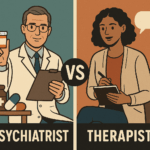
In some cases, medication may be necessary to help manage anxiety, especially when symptoms are severe or unresponsive to therapy alone. Selective serotonin reuptake inhibitors (SSRIs) are commonly prescribed to children and adolescents with anxiety disorders and have been found to be effective in many cases (Walkup et al., 2008). Medication should always be prescribed and monitored by a qualified healthcare professional.
Conclusion
Recognizing anxiety in children and adolescents is the first step toward providing the necessary support. Behavioral issues, such as school refusal, social withdrawal, and oppositional behaviors, may signal underlying anxiety that requires intervention. With the right coping strategies—such as CBT, mindfulness techniques, parental involvement, and school support—children and adolescents can learn to manage their anxiety and lead fulfilling, healthy lives.
References
American Psychiatric Association. (2022). Diagnostic and statistical manual of mental disorders (5th ed., text rev.).
Beesdo, K., Knappe, S., & Pine, D. S. (2009). Anxiety and anxiety disorders in children and adolescents: Developmental issues and implications for DSM-V. Psychiatric Clinics, 32(3), 483–524. https://doi.org/10.1016/j.psc.2009.06.002
Ghandour, R. M., Sherman, L. J., Vladutiu, C. J., Ali, M. M., Lynch, S. E., Bitsko, R. H., & Blumberg, S. J. (2019). Prevalence and treatment of depression, anxiety, and conduct problems in US children. Journal of Pediatrics, 206, 256–267.e3. https://doi.org/10.1016/j.jpeds.2018.09.021
Ginsburg, G. S., Drake, K. L., Tein, J. Y., Teetsel, R., & Riddle, M. A. (2011). Preventing onset of anxiety disorders in offspring of anxious parents: A randomized controlled trial. American Journal of Psychiatry, 168(12), 1186–1194. https://doi.org/10.1176/appi.ajp.2011.10060886
Merikangas, K. R., He, J. P., Burstein, M., Swanson, S. A., Avenevoli, S., Cui, L., … & Swendsen, J. (2010). Lifetime prevalence of mental disorders in U.S. adolescents: Results from the National Comorbidity Survey Replication–Adolescent Supplement (NCS-A). Journal of the American Academy of Child & Adolescent Psychiatry, 49(10), 980–989. https://doi.org/10.1016/j.jaac.2010.05.017
Walkup, J. T., Albano, A. M., Piacentini, J., Birmaher, B., Compton, S. N., Sherrill, J. T., … & Kendall, P. C. (2008). Cognitive behavioral therapy, sertraline, or a combination in childhood anxiety. New England Journal of Medicine, 359(26), 2753–2766. https://doi.org/10.1056/NEJMoa0804633
Zoogman, S., Goldberg, S. B., Hoyt, W. T., & Miller, L.